The 10x Rule: Why Revenue Is Vanity, but Data Is Wealth
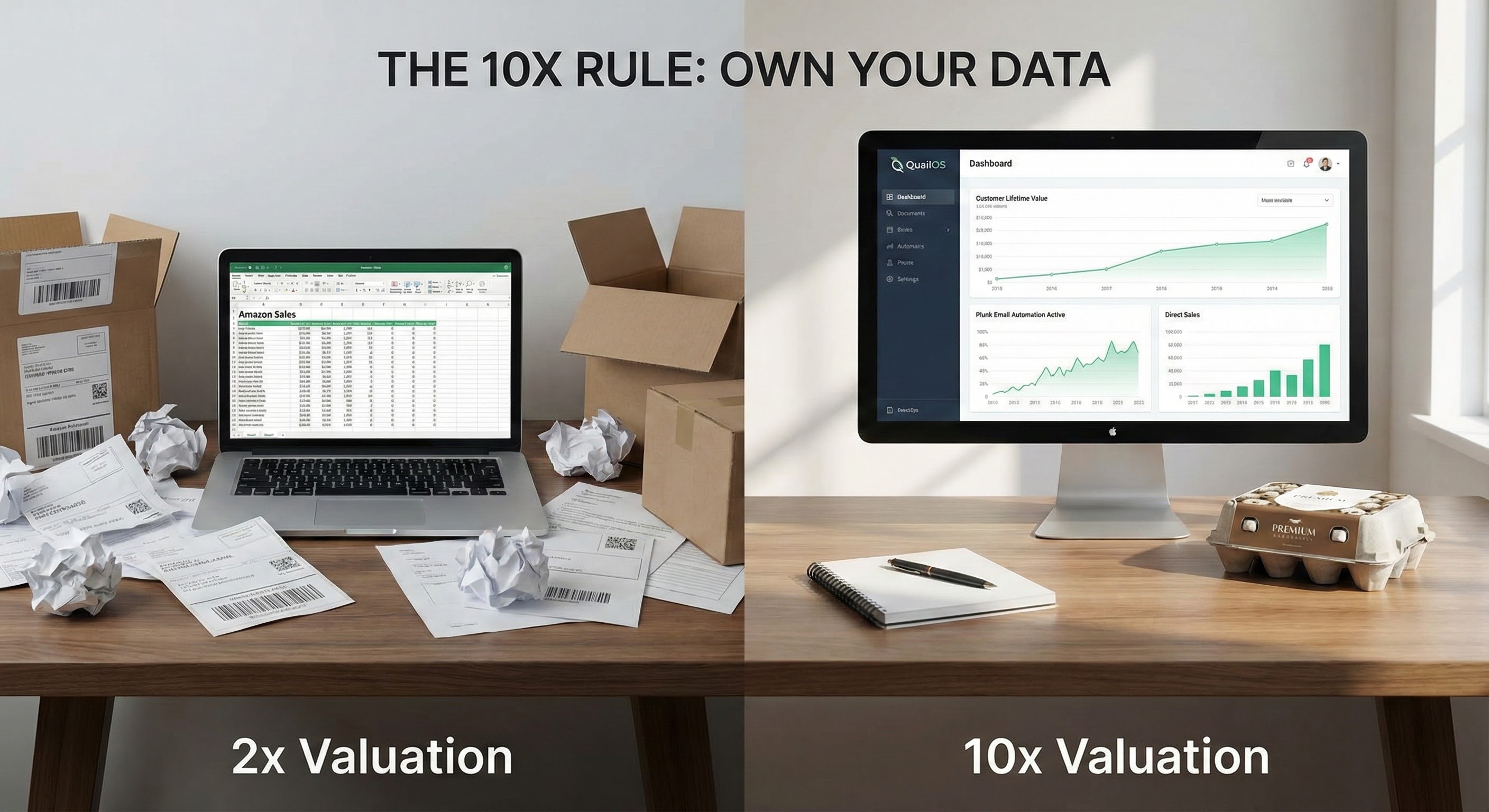
Two brands could make the exact same revenue—let’s say $1 million a year. Yet, when it came time to sell, one would sell for 10x EBITDA (profit), while the other struggled to get even 2x.
The 10x Rule: Why Revenue Is Vanity, but Data Is Wealth
Drew Sanocki, a veteran in the Direct-to-Consumer (DTC) space, spent eight years buying and selling brands. Over time, he noticed a confusing trend that every business owner needs to understand.
Two brands could make the exact same revenue—let’s say $1 million a year. Yet, when it came time to sell, one would sell for 10x EBITDA (profit), while the other struggled to get even 2x.
At first glance, you’d assume the expensive brand had a better product or a flashier logo. It didn’t.
The difference was customer data.
The Trap of "Rented Land"
When a buyer acquires a DTC brand, they aren't just buying your inventory or your website theme. They are buying predictable future cash flow. They are paying a premium for a list of loyal customers they know will buy again.
If the majority of your sales happen on third-party marketplaces (like Amazon or Etsy), you are building cash flow, but you aren't building a 10x asset. Why? Because Amazon owns those customers, not you. You cannot email them, you cannot retarget them, and you cannot predict when they will come back.
To shift from a 2x valuation to a 10x valuation, you need to own the infrastructure of your business.
How to Build a 10x Asset Today
Here is the strategy for moving from a transaction-based business to a data-based business.
1. Own the Financial & Operational Truth
A buyer will not pay a premium for a business run on spreadsheets and guesswork. They need to see that you understand your margins on a granular level.
Using a fragmented tech stack (like separate accounting software and shipping tools) often leads to data silos. This is why we advocate for centralized systems like QuailOS. When your shipping data, inventory management, and financial health are housed in one place, you can instantly answer the questions buyers care about:
- What is the true landed cost of your product?
- Which customers are the most profitable?
- What is your return rate by region?
2. Segment by Behavior, Not Just Demographics
Most businesses blast the same message to everyone. High-value brands group customers by behavior. You should be able to separate your customers into clear buckets:
- The One-Off: Buys once and never returns.
- The Subscriber: Recurring revenue (the holy grail of valuation).
- The Whale: High-volume buyers (e.g., breeders or partners).
If you treat a "Whale" the same way you treat a "One-Off," you are leaving money on the table.
3. Automate Retention
If you have a customer's email, you have an asset—but only if you use it.
Tools like Plunk allow you to automate the lifecycle of a customer. If you know your average customer needs a refill on supplies every 60 days, you shouldn't be hoping they remember to visit your site. Your system should automatically trigger a reminder email at day 55.
This turns a "hopeful sale" into "predictable revenue," which is exactly what drives a 10x valuation.
The Bottom Line
Stop looking at your business merely as a way to sell products. Start looking at it as a machine for acquiring and retaining customer data.
Your Action Plan:
- Migrate to Owned Channels: Use marketplaces to acquire customers, but use inserts and packaging to drive them to your own site for the second purchase.
- Centralize Your Data: Stop using five different apps to track your business. Use QuailOS to get a single source of truth for shipping and finances.
- Capture the Contact: Ensure you are moving customers into an automated flow on Plunk so you own the relationship, not the marketplace.
If you build the database, the valuation will follow.